How to Accept Crypto Anonymously: A Guide for Merchants
Accepting crypto without exposing your customers' payment records. What changes for a merchant, the practical costs, and when plain invoicing is enough.
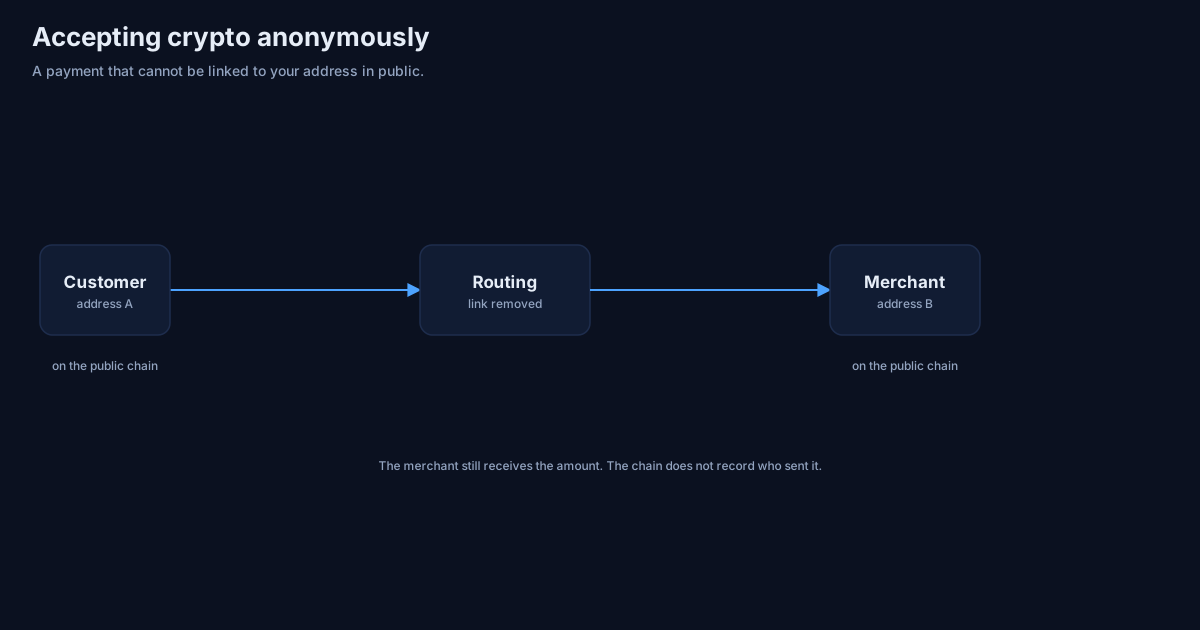
Most merchants accept crypto for convenience and settle in fiat later. That arrangement quietly creates a record linking a customer to a purchase, and often to whatever the customer was buying.
What standard checkout reveals
A conventional payment page shows the customer your address, the amount, and the time. Combined with a public ledger, that page becomes a permanent, searchable record of who paid you and when.
- The customer's paying address, permanently linked to your address
- The amount, which may itself be revealing
- The timing, which can be correlated with anything public
- For repeat customers, a visible history
For an ordinary shop this may be harmless. For a medical provider, a lawyer, a journalist, a political organisation, or anyone serving customers who face real risk, it is a genuine exposure.
What changes for your customers
With routing, the payment your customer sends cannot be linked to the address you receive at. You still know the amount, and you can still recognise a repeat customer by their own notes if you choose, but the public record no longer connects them to you.
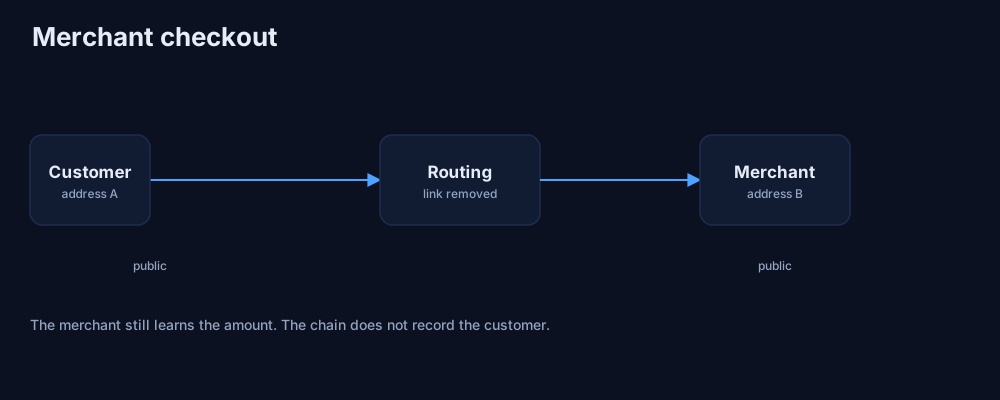
Nothing about the customer's experience changes. They pay from an ordinary wallet to a QR code or address, exactly as they would anywhere.
The practical costs
| Consideration | What to expect |
|---|---|
| Settlement | Usually slower than a direct on-chain payment |
| Fees | The routing step plus both chain fees |
| Refunds | Need handling as a fresh outgoing payment |
| Accounting | Your records show the amount, not the customer's address |
| Support | Explain to customers why the address differs each time |
Promising a customer that a payment is completely anonymous sets up a future disappointment. Describe accurately: the payment is not publicly linkable to your address. That is a meaningful, defensible property, and it does not need embellishment.
When plain invoicing is enough
If your customers face no risk in being identified as your customers, ordinary invoicing is simpler, faster and cheaper, and there is no strong reason to add complexity. The added cost is worth it when the association itself is the risk.
These guides are written to be accurate rather than promotional. If something here is out of date or wrong, it should be corrected, not defended.
Create a wallet