How to Send Crypto Anonymously: A Practical Guide to Monero Routing
How anonymous transfers actually work: what Monero routing hides, what it does not, and how to weigh the real trade-offs before you send.
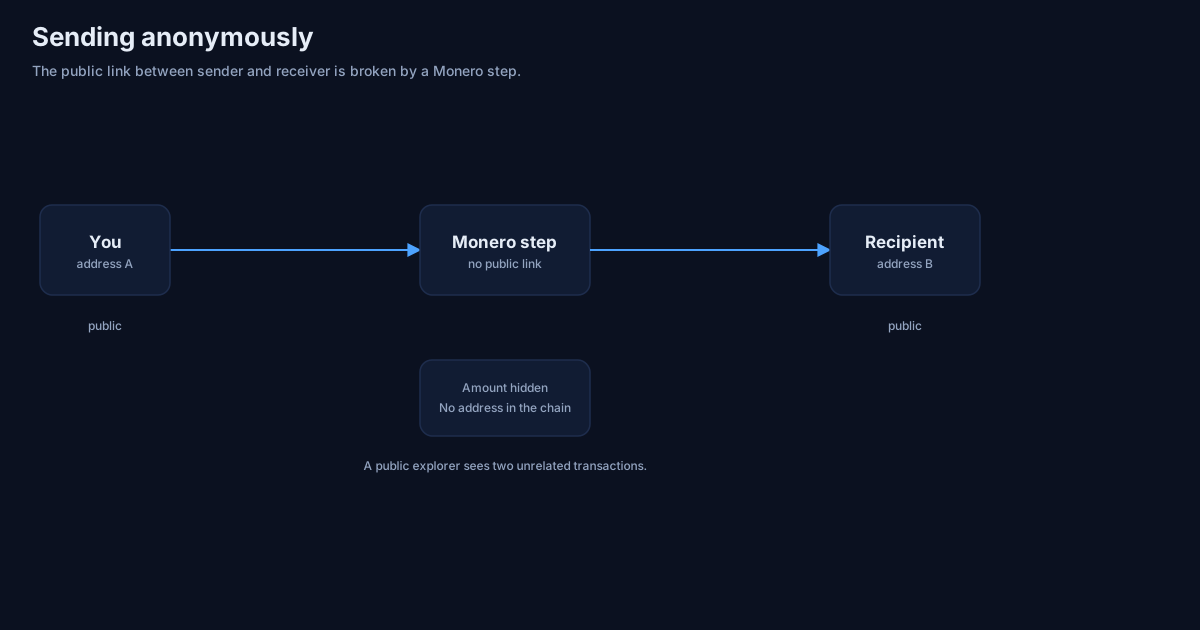
Most payment links leave a trail. When you pay an online merchant with a standard crypto transaction, the amount, the timing and the two wallet addresses are permanently public. Anyone can look up that address later and see what it received, and often infer who sent it.
This guide explains what routing a payment through Monero actually changes, what it leaves untouched, and how to decide whether the trade-off is right for you. It is written to be useful even if you never open this app.
What a normal payment reveals
A conventional crypto payment links two addresses permanently. If someone later posts your receiving address online, a blockchain explorer can show every transaction it ever took part in — amounts and dates included.
- The exact amount you sent, visible forever
- The time you sent it
- The address you sent from, and its entire history
- Any repeat visits between the same two addresses
None of that requires any special access. Block explorers are public and free. This is why privacy is a deliberate feature rather than a default: transparent ledgers are excellent for verifiability and poor for discretion.
What Monero routing changes
Monero is a privacy coin. Transactions are designed so that the sender and receiver cannot be linked, and the amount is hidden. Routing a payment through a Monero step breaks the link between your address and the destination.
The practical effect is that a blockchain explorer can no longer connect your sending address to the recipient's address. What is published is two unrelated Monero transactions, with no public evidence tying them together.
What routing does not hide
Privacy tools are frequently oversold, and the honest version is more useful than the marketing version. Monero routing does not make you anonymous in absolute terms.
- Your network provider can still observe when you connect and roughly how much data moved
- An exchange that you funded from can see the withdrawal, and may record your identity at that point
- Timing and volume analysis becomes weaker, not impossible, against large or unusual movements
- Anyone who already knows both addresses, and knows you sent between them, still knows
On-chain privacy is only as strong as the weakest on-ramp. If you buy crypto on a KYC exchange and send it straight out, your identity is already attached to that withdrawal. Routing afterwards cannot undo a record made before it.
Sending with routing
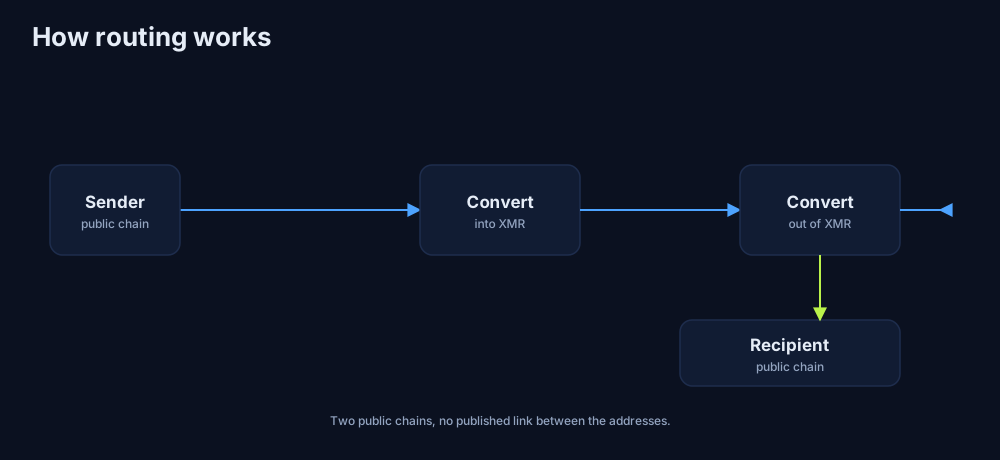
The mechanics are straightforward once the funding source is understood. Routing supports major networks including Ethereum and BNB Smart Chain, and a second network can be chosen per transfer.
- Create your wallet, or open an existing one with your seed phrase
- Add funds from a source you are comfortable having on record, or from an already-private balance
- Enter the recipient's address and the amount, and choose the network they expect
- Review the fee and confirm; the conversion happens automatically during the transfer
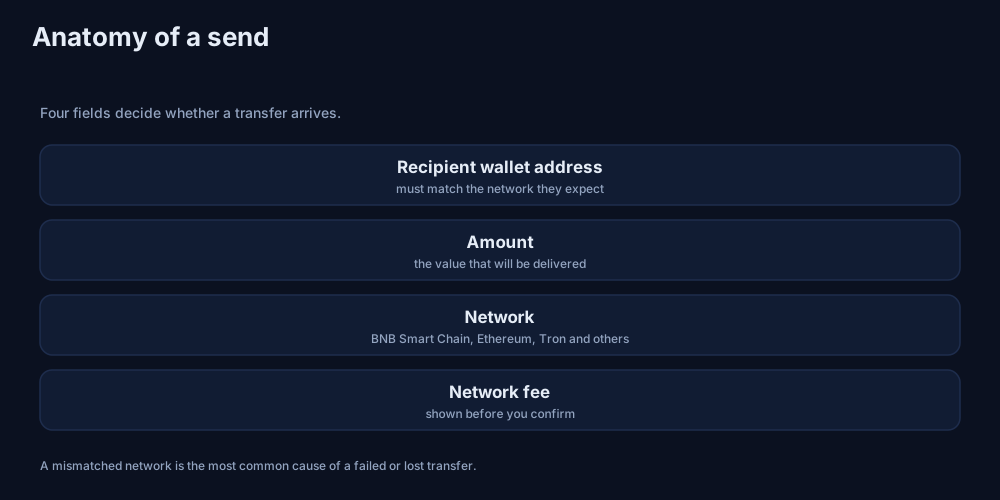
Because the conversion is automatic, there is no manual step to forget and no intermediate address to copy incorrectly. The recipient sees a normal incoming payment.
When it is worth the trade-off
Routing is not the right default for every payment, and pretending otherwise would be poor advice. The costs are real: a network fee, a slightly longer transfer, and a reliance on a third party during the conversion window.
| Situation | Is routing worth it? |
|---|---|
| Paying a merchant who states a public policy | Usually not |
| Paying an individual you would rather not be linked to | Yes |
| Regular payments between known parties | Occasionally |
| A one-off purchase of an ordinary good | Rarely |
| Any payment where being identified would cause real harm | Yes, and worth the fee |
A useful test: would you be comfortable if both addresses and the amount were published permanently and permanently linkable to you? If yes, you probably do not need the extra step. If the answer makes you uneasy, this is what it is for.
The bottom line
Monero routing breaks the public link between sender and receiver. It is a real improvement over a transparent payment, and it is not a cloak of invisibility. The decisive factor is usually where the funds came from, not the sending step.
Privacy is a feature you choose, not a state you are placed in. Choose it for the payments where the difference would actually matter to you.
These guides are written to be accurate rather than promotional. If something here is out of date or wrong, it should be corrected, not defended.
Create a wallet